
How to Check West Point Criminal History
Start with the West Point Police and Court Services hub for an incident report, arrest report, citation, or municipal case question. No verified public defendant-name database appeared on the official city site. Call 706-645-2226 with the name, date, exact location, and any incident or citation number. The location matters because West Point crosses the Harris and Troup county line.
Use a record-by-record sequence:
- Ask West Point police to locate the incident and provide its report number.
- Confirm the arrest location and booking facility rather than guessing the county.
- Ask Court Services for the municipal docket or disposition.
- For state charges, contact the clerk and jail in the county identified by the city.
- For a broader self-review, use the official Georgia channels described in the Harris County overview.
West Point Records Cross Counties
West Point lies on the Chattahoochee River and extends into Harris and Troup Counties. Its 2024 incorporated-place estimate was 3,602, but that citywide total cannot decide venue for one event. Venue means the legally proper place for the case. It follows the incident and charge, not the city name alone.
Write down the street or intersection, responding agency, report number, and jail named on release papers. If police cannot find the record by name, ask for a date and incident-number search. Then ask which clerk received the charge. A West Point address alone is not proof that Harris Superior Court holds the file.
County-line caution: Confirm the booking destination before choosing a county arrest or court search.
The West Point Police Department
Chief Kevin Carter leads West Point divisions that include Uniform Patrol, Criminal Investigations, Court Services, Community Outreach, Professional Standards, and Animal Control. Each can create a different file. Patrol and investigators create event records. Court Services maintains city case records, schedules matters, and collects fines and fees. Professional Standards handles accountability records rather than prosecution files.
Call 706-645-2226 and describe the exact document. Give a full name, event date, location, and report or citation number if known. Ask for the records custodian and the accepted request method. A vague request for a background check may not identify the West Point report actually needed.
West Point Police and Court Services
Police reports and municipal case routing
706-645-2226
West Point Request Channels Differ
A records request, Report a Concern submission, and Citizen Complaint do different work. A records request seeks an existing incident or arrest document. The concern form routes an operational issue. The complaint channel concerns employee conduct through Professional Standards. Neither online channel should be relabeled as a public criminal case search.
| Channel | Use | Limit |
|---|---|---|
| Records request | Existing police document | Must describe the record |
| Report a Concern | Operational concern | Not confirmed as an ORA form |
| Citizen Complaint | Professional Standards matter | Not a defendant search |
| Payment instructions | Eligible obligation | Not criminal history |
State clearly that the request is made under the Georgia Open Records Act when seeking an existing record. Save the submission confirmation and ask which custodian will respond.
Arrests and Bookings in West Point
West Point police create the arrest report, but the research does not support sending every city arrest to Harris County Jail. Ask the department where the person was booked. A Harris-side event may route to Harris jail and court offices; a Troup-side matter can route elsewhere. Bond or release papers often identify the facility and court.
An arrest report records the officer's allegations and actions. A booking file confirms custody facts. Neither proves guilt. The prosecutor may alter or decline charges, and only the court file supplies the legal result. When a recent record is not online, call the named jail or submit a focused request. The Harris arrest history route applies after Harris custody is confirmed.
Note: Always compare a West Point arrest with the later disposition.
West Point Payments Are Not History
West Point Court Services collects fines and fees, but a payment channel is not a defendant-name search. A receipt proves a transaction. It may not display the complete docket, amended charge, judgment, or every hearing. Payment eligibility also does not prove that no court appearance is required.
Ask Court Services for the docket and disposition linked to the case or citation number. If staff says a state charge moved to county court, obtain the county and new case identifier. Then request the final judgment from that clerk. This avoids treating a payment screen as a complete West Point criminal record.
West Point Municipal Court Records
The Court Services Division maintains municipal records and schedules cases. No official public name search was verified. Call with a citation or case number, name, and approximate date. Ask for the status, next setting, disposition, and copy procedure.
| Court Name | West Point Municipal Court |
|---|---|
| Case Types Heard | City violations and matters within municipal jurisdiction |
| Case Lookup Channel | Phone or Court Services contact; no verified public name database |
| What the Docket Shows | Events, settings, city charge, and recorded outcome |
| Copies & Fees | Ask staff for current copy procedure and cost |
West Point Court Services Source
The city describes local case administration on its official Court Services page.
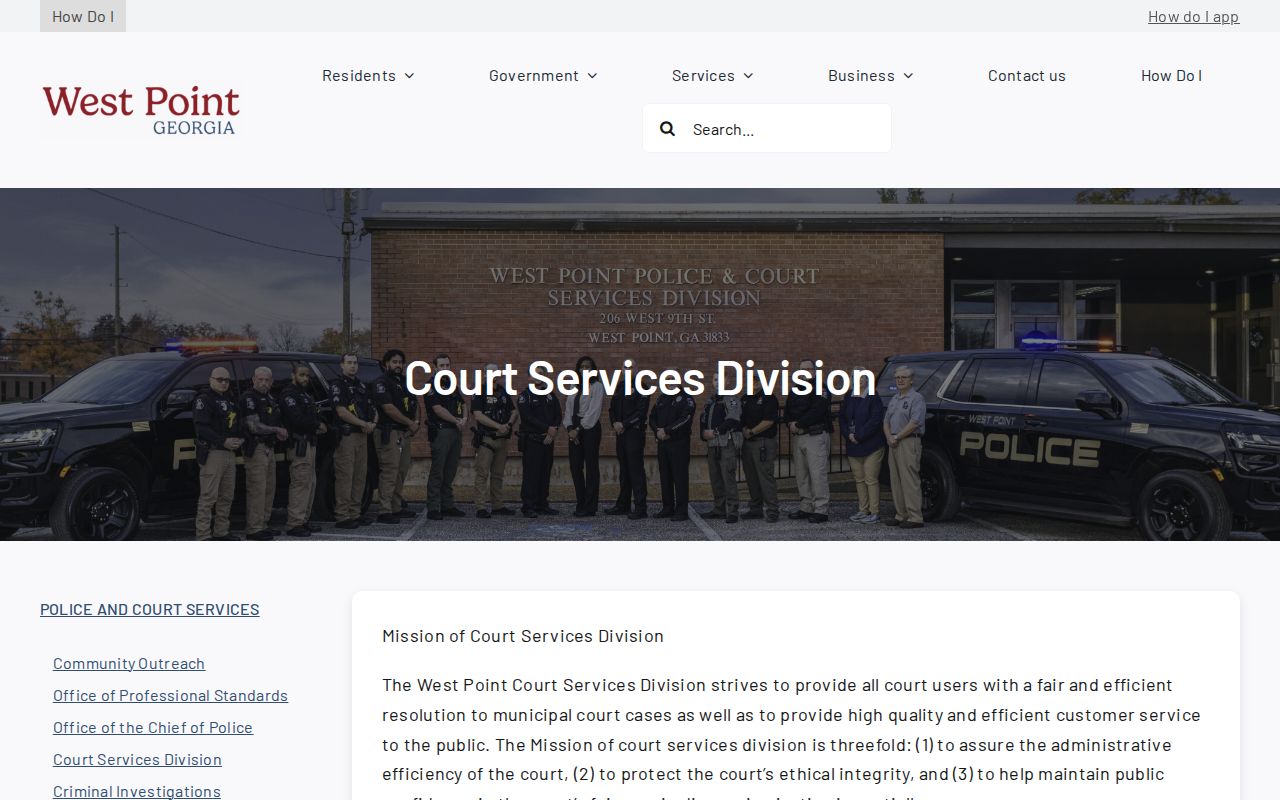
Use that page for contact and current instructions, then request the docket or judgment rather than relying on a payment confirmation.
West Point City and County Cases
Municipal Court and Superior Court are separate custodians. West Point Court Services keeps city matters. A felony-level state charge belongs in Superior Court for the proper county. Magistrate Court may hold warrant and first-appearance records. The later county docket can differ from the allegations in the first police report.
- Municipal case
- A city matter within the local court's authority.
- Disposition
- The recorded outcome, such as dismissal, plea, verdict, or sentence.
- Docket
- The chronological index of court events and filings.
- Venue
- The county and court legally assigned to hear the matter.
Request each file from its creator. Court Services can identify a transfer, while the receiving clerk can certify the final county judgment.
A municipal citation number may stop being the best identifier after a state charge reaches county court. Ask West Point staff whether a new county case number was assigned and whether the matter was sent to a prosecutor. Provide both numbers to the clerk when possible. For a Harris-side felony, the Harris Clerk of Superior Court keeps filed pleadings, docket events, judgments, and sentences. A warrant or first appearance may require a separate Magistrate Court request.
Older West Point records may not appear in a current electronic index. Give the clerk an approximate year, full legal name, and known charge, then ask about archive retrieval and certified copies. Certification is the clerk's formal verification that a copy matches the official file. It differs from an uncertified screen print or payment receipt.
Where West Point Criminal Records End Up
West Point Police creates the first city record. A jail separately records custody. Court Services keeps municipal matters, while state charges move to the proper county court. Fingerprint-supported arrest and disposition data may later reach the Georgia Crime Information Center.
Record flow: West Point Police › correct county jail and courts › Georgia Bureau of Investigation, Georgia Crime Information Center
Police, jail, court, and GCIC records answer different questions. A missing or delayed disposition can create gaps. For an official self-review, compare the Georgia history with the originating West Point report and final court judgment.
West Point Official Record Sources
The official city homepage is the municipal directory for current department routes.
Follow its current department links before sending a request.
The combined Police and Court Services page explains the local organization.
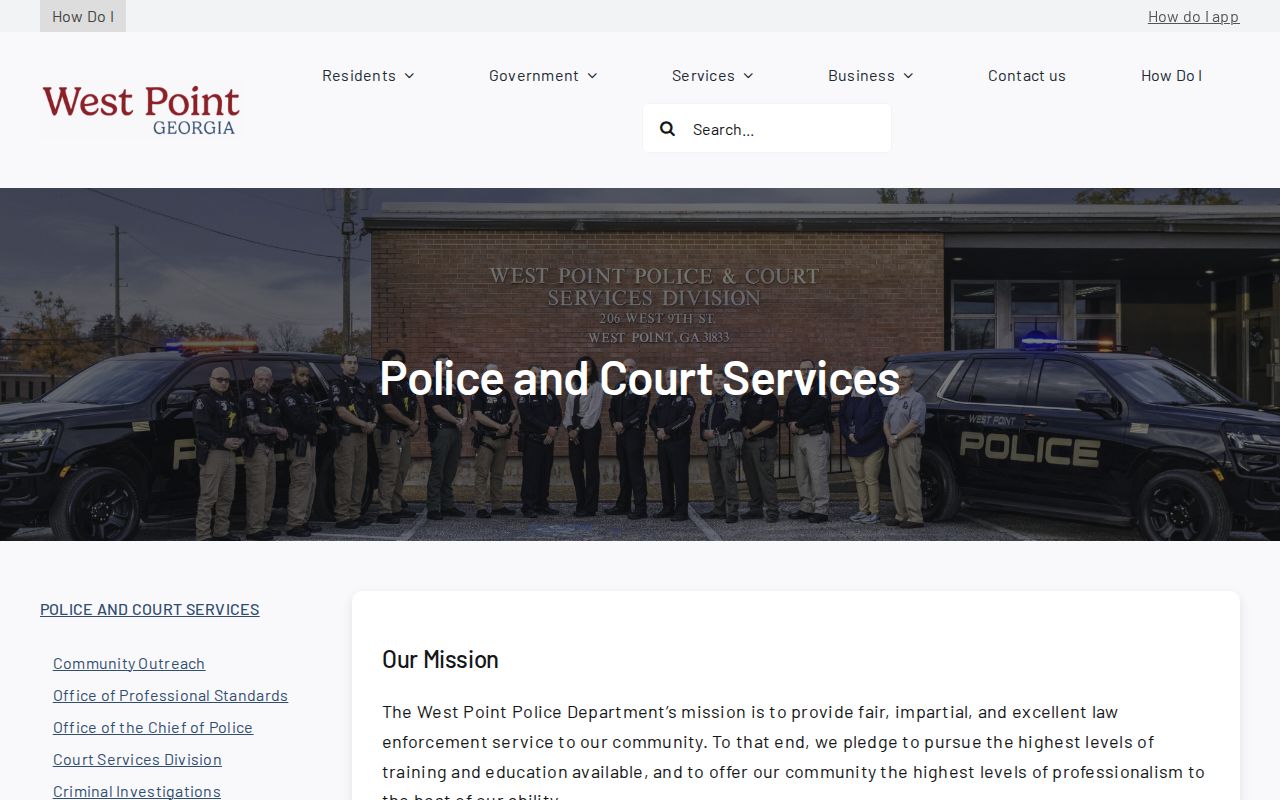
Its division list helps route police, court, and Professional Standards records to the right unit.
Public Access Rules for West Point Records
The Georgia Open Records Act presumes public records open unless an exemption applies. Describe the West Point record, date range, incident, and preferred format. An agency generally produces responsive public material within three business days or gives a timetable and legal explanation. Protected personal data, sealed files, and exempt investigative material may be withheld or redacted.
Georgia criminal-history dissemination is narrower than access to one police report. Public felony-conviction information follows its own identification rules. Broader GCIC data can require consent or an authorized channel. Record restriction may limit qualifying arrest information, while a related court file may require sealing.
Key Statutes:
Georgia Open Records Act, O.C.G.A. §§ 50-18-70 through 50-18-77 - governs requests and agency responses.
O.C.G.A. §§ 35-3-34 and 35-3-35 - govern criminal-history access and dissemination.
O.C.G.A. § 35-3-37 - provides restriction and related sealing paths.
West Point Record Follow-Up
If the first West Point call produces no match, do not assume the record does not exist. Confirm spelling, aliases, event date, address, and the agency that answered the call. Ask police to search the report number rather than a name alone. For a citation, give Court Services the printed citation number. For a booking, use the facility named by police or release paperwork. These identifiers help separate people with similar names and expose a county-routing error.
When a state history lacks the final result, obtain the disposition from the correct clerk. Ask whether the court or prosecutor has transmitted it to GCIC. West Point Police can verify the arrest-side data it created, but it cannot replace a court judgment. Keep copies of the incident report, docket, disposition, and correction request. Matching the arrest date and tracking details across those documents gives the custodian a clear basis for review.